Rising Alcohol Use in Older Women: The Hidden Risks of Binge Drinking After 50
Why Are Older Women Drinking More Than Ever Before?
Every month, my book club gathers for dinner, conversation, and—of course—a few drinks. Someone always brings wine, and a couple of bottles make their way around the table. But here’s what I’ve noticed: even with a dozen of us, we rarely finish two bottles. Sometimes, we don’t even finish one. Some skip alcohol for the calories, others because of medications, and most of us drive to the meeting. A few just don’t enjoy it as much as they used to.
That puts my group of women, aged 50 to 75, in stark contrast to a growing trend. A recent government study reveals that older women are drinking more, binge drinking more, and the number of heavy drinkers among them is rising faster than it is for men. At first glance, it might seem like progress—another step toward equality. But as it turns out, equality in this case comes with serious consequences.
The Unique Risks Women Face with Alcohol
According to the National Institute on Alcohol Abuse and Alcoholism (NIAAA), women experience alcohol-related problems sooner and at lower consumption levels than men. Why? Because, biologically, women tend to weigh less and have less water in their bodies compared to men. Since alcohol is water-soluble, this means that after consuming the same amount of alcohol, a woman’s blood alcohol concentration (BAC) will typically be higher than a man’s of the same weight. This puts women at a greater risk for harm, even with smaller amounts of alcohol.
Heavy, episodic drinking can lead to what we often call the “sloppy drunk”—the person at the party who’s a little too friendly, a little too loud, and maybe a little too handsy. When it’s a man, we might shrug it off, assuming he’ll sleep it off. But when it’s a woman, the reaction is often different. There’s an unspoken judgment: She has a problem. And while that might seem unfair, research suggests there could be some truth to it. Studies show that binge drinking among older women is on the rise, even as it remains relatively stable among men in the same age group.
The Dangers of Binge Drinking After 50
Binge drinking isn’t just about getting drunk before heading out to a party—it’s defined by the NIAAA as consuming enough alcohol to raise your blood alcohol concentration to 0.08% or higher. For women, this typically happens after about four drinks in two hours. That’s a lot of alcohol in a short amount of time, and it can have serious health consequences, including liver disease, heart problems, and an increased risk of cancer.
Living in Washington, D.C.’s Georgetown neighborhood, I’ve seen my fair share of college students pre-gaming before a night out. But I’ve come to realize that binge drinking isn’t just a young person’s problem. It’s happening among older women, too—and the risks are just as real, if not more so, given the physical changes that come with age.
What Counts as a Standard Drink? You Might Be Surprised
If you think you’re a moderate drinker, you might be in for a surprise. Many of us misunderstand what constitutes a “standard” drink. According to guidelines from the U.S. Department of Health and Human Services, a standard drink is:
- 5 fluid ounces of wine
- 12 fluid ounces of beer
- 1.5 fluid ounces of distilled spirits (vodka, gin, tequila, rum, or whiskey)
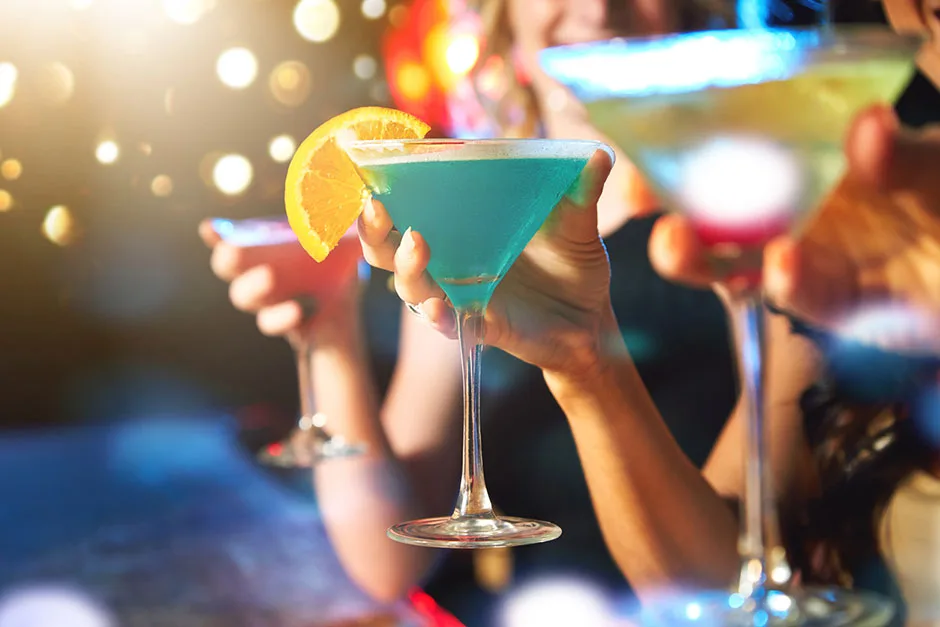
For me, cocktail hour often means mixing 3 ounces of vodka with 5 ounces of San Pellegrino Limonata. Sounds like one drink, right? Wrong. That’s actually two standard drinks. And if you’re like me and enjoy a “heavy pour,” you might be consuming more alcohol than you realize.
Government research defines low-risk drinking for women as no more than three drinks in a single day and no more than seven drinks per week. Given my usual cocktail, that means I can’t indulge in my evening ritual every day if I want to stay within those guidelines.
Why Are Older Women Drinking More?
Researchers aren’t entirely sure why older women are drinking more. Some speculate it could be a response to stress, loneliness, or the challenges of aging. Others point to changing social norms or the idea that women today feel more empowered to drink as much as they want. Whatever the reason, the trend is clear—and it’s concerning.
For my part, I’ve made a decision: I’m going to cut back on the vodka in my cocktail so I can enjoy it every evening. It’s not about the alcohol for me—it’s about the ritual. The clink of ice in my glass, the line between the workday and the evening, the slow sipping as I prepare dinner. That’s what I find satisfying, not the amount of alcohol (or Limonata) in my drink.
The Bottom Line
The “why” behind this trend may remain a mystery, but the research is clear: older women are drinking more, and the risks are real. Whether it’s binge drinking or simply misunderstanding what counts as a standard drink, the consequences can be serious. The good news? We can all take steps to drink more mindfully, whether that means cutting back, measuring our pours, or simply being more aware of how much we’re consuming.
At the end of the day, it’s not about giving up the things we enjoy—it’s about enjoying them in a way that keeps us healthy and safe.