The Secret to Aging Stronger? Embrace a Little Discomfort
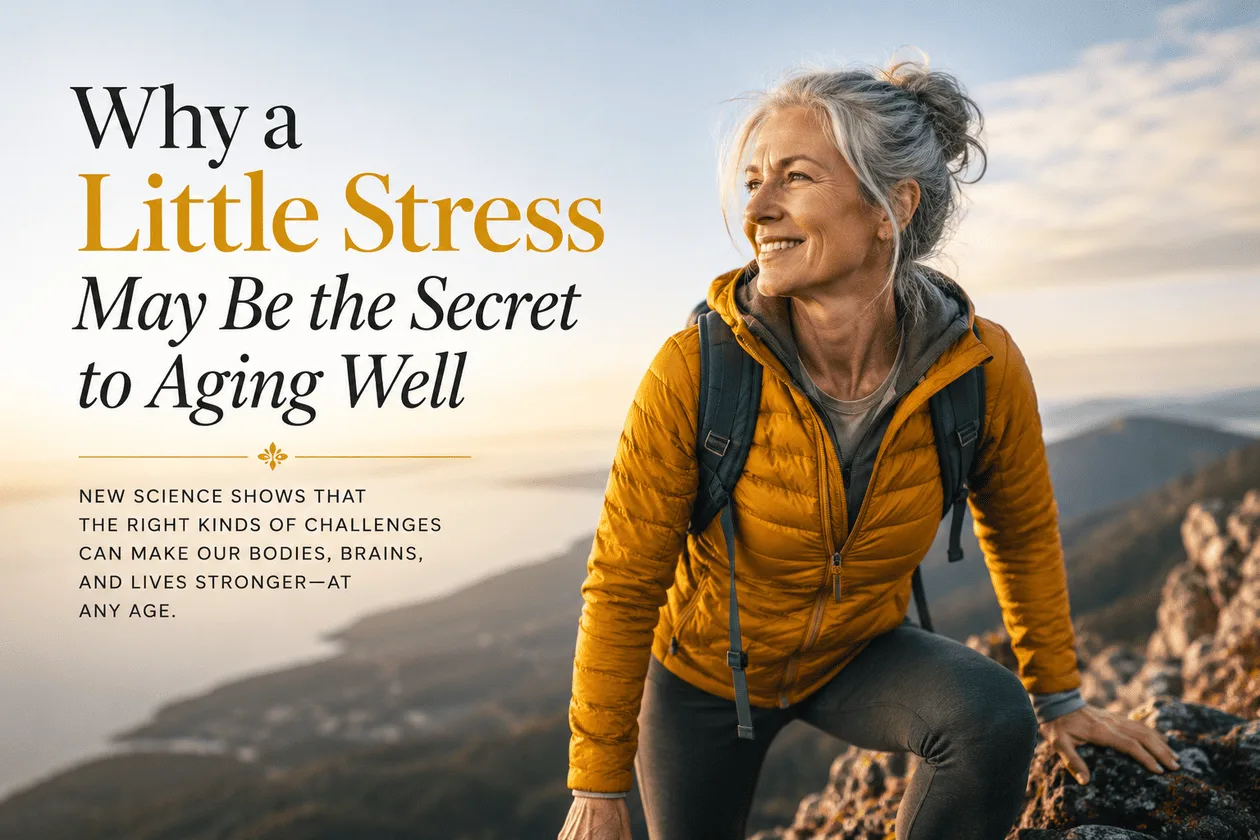
Why Comfort Might Be Holding You Back
After decades of hard work—building careers, raising families, and juggling endless responsibilities—it’s natural to crave comfort. We invest in cozy shoes, ergonomic chairs, and the latest conveniences to make life easier. And for good reason: chronic stress is undeniably harmful to our health. But here’s the surprising truth: not all stress is bad.
In fact, science is uncovering that small, manageable doses of stress might be the key to aging better. It’s called hormesis, and it’s one of the most exciting breakthroughs in longevity research. The idea is simple: when we expose our bodies and minds to mild challenges, they adapt, grow stronger, and become more resilient. Think of it like a workout for your entire system—except the “workout” could be anything from lifting weights to learning a new skill.
What Is Hormesis, and How Does It Work?
Hormesis is a biological principle where a low-level stressor triggers a positive response. Take exercise, for example. When you lift weights, run, or even take a brisk walk, you’re stressing your muscles, heart, and metabolism. But afterward, your body recovers—and comes back even stronger. The same applies to other areas of health:
- Muscles: Resistance training builds strength and prevents age-related muscle loss.
- Bones: Weight-bearing activities boost bone density, reducing fracture risk.
- Brain: Learning new skills stimulates neuroplasticity, keeping your mind sharp.
- Metabolism: Short bursts of activity improve insulin sensitivity and energy levels.
- Resilience: Overcoming small challenges trains your body to handle bigger ones.
The catch? The stress has to be just right—not too little, not too much. It’s not about suffering or pushing yourself to exhaustion. It’s about giving your body and mind the right kind of nudge to thrive.
The Comfort Paradox: Why Modern Life Is Making Us Weaker
For most of human history, our ancestors faced daily challenges that naturally provided hormetic stress. They walked long distances, carried heavy loads, endured temperature swings, and constantly adapted to new situations. Their bodies were built for movement, problem-solving, and resilience.
Fast-forward to today. Many of us spend our days sitting—moving from climate-controlled homes to cars to offices. Food arrives with a tap on our phones. GPS tells us where to go. Streaming services decide what we watch. While these conveniences have improved our quality of life, they’ve also stripped away many of the small, beneficial challenges our bodies evolved to expect.
The result? A paradox. We’re more comfortable than ever, yet rates of obesity, metabolic disease, frailty, and cognitive decline are on the rise. Our bodies and brains are designed to adapt, but when we remove all the opportunities to do so, they start to decline. The solution isn’t to abandon comfort entirely—it’s to strategically reintroduce challenge.
Why Hormesis Matters More After 50
If you’re over 50, hormesis isn’t just helpful—it’s essential. Many of the systems that naturally decline with age respond remarkably well to the right kind of stress:
- Muscle Mass: After 30, we start losing muscle at a rate of 3-8% per decade, accelerating after menopause. Resistance training can reverse this trend, even in your 60s, 70s, and beyond.
- Bone Density: Osteoporosis is a major concern for aging adults, but weight-bearing exercises can strengthen bones and reduce fracture risk.
- Balance and Mobility: Falls are a leading cause of injury in older adults. Activities like yoga, tai chi, or even walking on uneven terrain can improve stability.
- Metabolism: A slowing metabolism is often blamed on age, but it’s largely due to reduced activity. Short bursts of movement can reignite your metabolic engine.
- Cognitive Function: The brain remains adaptable throughout life. Learning new skills, solving puzzles, or even navigating a new city can keep your mind sharp.
The good news? Your body never loses its ability to adapt. What often changes is our willingness to challenge ourselves. Many people unconsciously shrink their worlds as they age—avoiding new activities, declining invitations, or sticking to what’s familiar. But research shows that the women (and men) who age the strongest are the ones who keep expanding their horizons.
Your Brain Thrives on Challenge
One of the most exciting areas of hormesis research is brain health. For years, we’ve been told that cognitive decline is an inevitable part of aging. But science is proving that’s not entirely true. The brain remains highly adaptable—even in your 80s and 90s.
Every time you learn something new, your brain forms and strengthens neural connections, a process called neuroplasticity. Whether it’s picking up a new language, mastering a musical instrument, or figuring out how to use the latest AI tool, these challenges force your brain to work harder. And that effort? It’s what keeps your mind sharp.
This might explain why some people stay mentally agile well into their later years. They never stop learning. The next time you feel frustrated while trying to figure out a new gadget or app, remember: that frustration is a sign your brain is doing exactly what it should be doing—growing.
The Power of Being Bad at Something
Most of us enjoy activities we’re already good at. It feels good to be competent. But growth doesn’t happen in our comfort zones—it happens when we’re awkward, uncertain, and slightly out of our depth.
Think about the first time you tried something new: your first yoga class, your first attempt at a foreign language, or your first solo trip. Chances are, you weren’t great at it. You might have felt clumsy, confused, or even a little embarrassed. But those feelings weren’t signs to quit—they were signs that your brain and body were adapting.
One of the healthiest habits you can develop as you age is becoming comfortable with temporary incompetence. Kids do this naturally—they try, fail, and try again without a second thought. Adults, on the other hand, often avoid situations where they might look or feel inexperienced. But the people who continue to grow throughout their lives are the ones willing to be beginners over and over again.
7 Simple Ways to Practice Hormesis Daily
You don’t need to run a marathon or climb a mountain to benefit from hormesis. Small, consistent challenges can make a big difference. Here are seven easy ways to start:
1. Lift Something Heavy
Resistance training is one of the most powerful anti-aging tools available. Aim for 2-3 strength sessions per week, focusing on compound movements like squats, deadlifts, and push-ups. If you’re new to lifting, start with bodyweight exercises or light dumbbells and gradually increase the weight.
2. Move More, Sit Less
Sitting for long periods is one of the worst things you can do for your health. Set a timer to stand up and move every 30-60 minutes. Take the stairs instead of the elevator. Park farther away from the store. Small bursts of movement add up to big benefits.
3. Try Temperature Extremes
Cold showers, saunas, or even stepping outside in cold weather can trigger a hormetic response. Cold exposure, in particular, has been shown to reduce inflammation, boost immunity, and improve mood. Start with 30 seconds of cold water at the end of your shower and work your way up.
4. Fast Intermittently
Intermittent fasting—such as eating within an 8-hour window and fasting for 16—can improve metabolic health, enhance cellular repair, and even extend lifespan. Start with a 12-hour fast (e.g., stop eating at 7 PM and don’t eat again until 7 AM) and gradually increase the window.
5. Learn Something New
Challenge your brain by picking up a new hobby, skill, or language. Whether it’s painting, coding, or playing the piano, the act of learning keeps your mind agile. Aim for at least one new challenge per month.
6. Step Outside Your Comfort Zone
Do something that scares you a little. Travel solo. Take a dance class. Strike up a conversation with a stranger. The discomfort you feel is a sign that you’re growing.
7. Prioritize Sleep (But Not Too Much)
While sleep is essential for recovery, too much can be a sign of stagnation. Aim for 7-9 hours per night, but don’t use sleep as an escape from life’s challenges. Quality matters more than quantity.
Final Thought: Embrace the Discomfort
Aging isn’t about avoiding discomfort—it’s about learning to use it. The small challenges you face today could be the key to a stronger, healthier, and more vibrant tomorrow. So the next time you’re tempted to take the easy way out, ask yourself: What’s one small thing I can do to push myself just a little?
Your future self will thank you.
For more on the science of longevity, check out the National Institutes of Health.